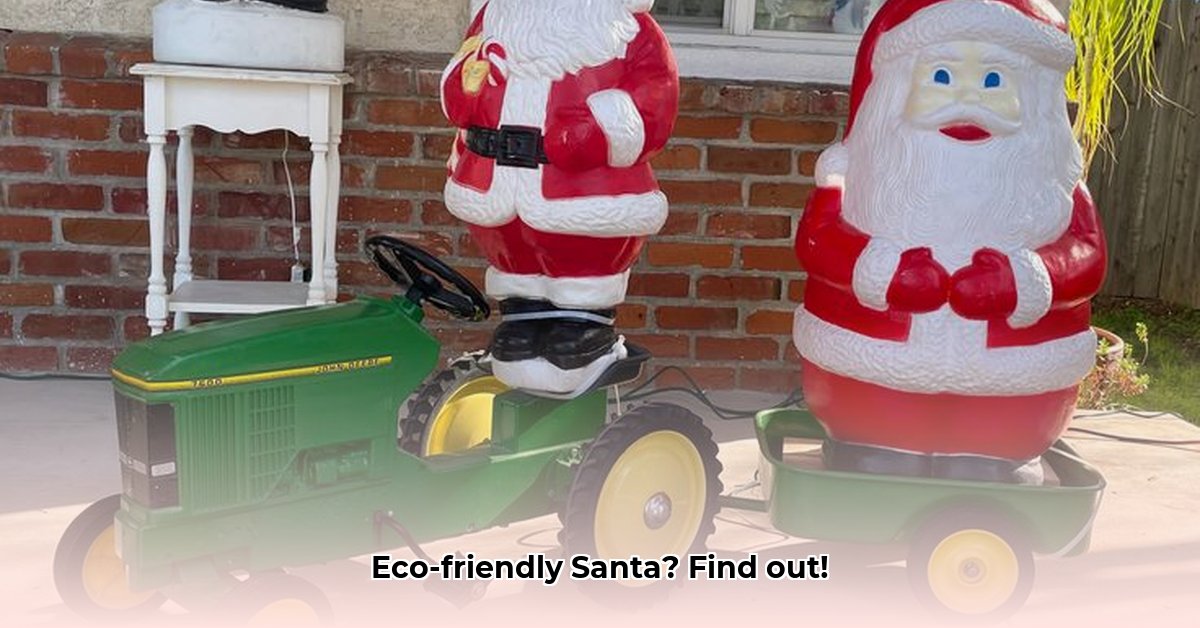
Santa on John Deere Tractor Inflatable: A Festive Paradox?
The John Deere Santa inflatable, a charming holiday staple for many, presents a compelling case study in the tension between festive consumerism and environmental sustainability. While its popularity is undeniable, evidenced by strong online sales and widespread visibility, its environmental impact remains largely opaque. This lack of transparency raises significant concerns regarding brand alignment and responsible consumption. For more information on the product's lifecycle, see this helpful resource.
Market Analysis: A Popular but Questionable Product
The John Deere Santa inflatable enjoys considerable market success, readily available on platforms like Amazon 1 and the John Deere website. Its appeal stems from the iconic John Deere brand, festive imagery, and ease of use. However, this popularity underscores a critical issue: the environmental cost associated with the mass production and disposal of these largely single-use decorations. The sheer volume sold annually suggests a potentially significant environmental burden. Precise sales figures, while unavailable for this specific product, highlight the need for a comprehensive market analysis to fully understand its scale and sustainability implications.
Sustainability Assessment: A Lack of Transparency
A major obstacle in assessing the inflatable's environmental impact is the lack of transparency surrounding its manufacturing. Neither John Deere nor its manufacturers publicly disclose detailed information on the materials used or the production processes. This opacity hinders any meaningful Life Cycle Assessment (LCA), preventing a clear understanding of its carbon footprint, waste generation, and recyclability. The absence of this crucial data leaves consumers and environmental advocates with significant concerns. How many end up in landfills annually? What are the long-term environmental consequences of these practices? These questions remain unanswered.
Brand Alignment: A Potential Image Crisis
John Deere has cultivated a strong brand image associated with sustainable agricultural practices. The lack of environmental transparency surrounding its holiday inflatable creates a significant brand dissonance. This discrepancy could damage the company's carefully constructed image of environmental responsibility. The question arises: Does the festive appeal outweigh the potential reputational damage from a product with an unclear environmental footprint?
Actionable Recommendations: A Multi-Stakeholder Approach
Addressing the environmental concerns surrounding the John Deere Santa inflatable requires a concerted effort from various stakeholders. We propose the following actionable strategies:
1. John Deere:
- Commission an independent and transparent Life Cycle Assessment (LCA) of the inflatable to quantify its environmental impact. (Target completion: 6 months)
- Explore and implement the use of more sustainable materials, such as biodegradable plastics or recycled content, in future iterations. (Target completion: 12 months)
- Establish a take-back program for discarded inflatables to facilitate responsible recycling or disposal. (Target completion: 18 months)
2. Manufacturers:
- Publicly disclose detailed information regarding manufacturing processes and material sourcing, including a full bill of materials. (Target completion: 3 months)
- Invest in recycling infrastructure and programs tailored to the specific materials used in the inflatable's construction. (Target completion: 12 months)
- Design future inflatables with recyclability as a primary design criterion. (Target completion: 18 months)
3. Consumers:
- Demand greater transparency from manufacturers and retailers about the environmental footprint of the products they purchase. (Continuous action)
- Prioritize purchasing products made with eco-friendly materials and from companies committed to sustainability. (Continuous action)
- Consider more durable and reusable holiday decorations as alternatives to single-use inflatables. (Continuous action)
4. Environmental NGOs:
- Advocate for stronger regulations regarding the production and disposal of seasonal decorative items. (Continuous action)
- Launch public education campaigns to raise awareness about the environmental implications of disposable holiday decorations. (Continuous action)
- Collaborate with manufacturers and retailers to develop innovative design solutions and sustainable end-of-life management strategies. (Continuous action)
Risk Assessment: Potential Consequences and Mitigation
The risks associated with the current situation are considerable. A highly likely consequence is damage to John Deere's brand image, particularly among environmentally conscious consumers. The potential for increased waste generation is also significant, given the product's short lifespan. Regulatory scrutiny, while currently low, could intensify as environmental awareness grows. Supply chain disruptions, particularly in sourcing sustainable materials, pose an additional risk. The recommended mitigation strategies, outlined above, are aimed at addressing each of these potential issues.
Regulatory Implications: Adapting to Evolving Standards
While current regulations may not explicitly address holiday inflatables, the regulatory landscape is evolving. Future regulations are likely to mandate greater transparency in material composition and end-of-life management. Proactive compliance with existing and anticipated regulations is crucial for John Deere and its manufacturers to avoid future penalties and maintain a positive brand image.
Conclusion: A Call for Responsible Festive Consumption
The John Deere Santa inflatable serves as a microcosm of broader challenges in balancing festive consumerism with environmental responsibility. Greater transparency, sustainable material choices, and responsible disposal practices are crucial for mitigating the environmental impact of holiday decorations. By collaboratively addressing these issues, stakeholders can contribute to a more sustainable and environmentally conscious holiday season. The future of festive celebrations depends on this collective effort.